
 Anabelle Mclean
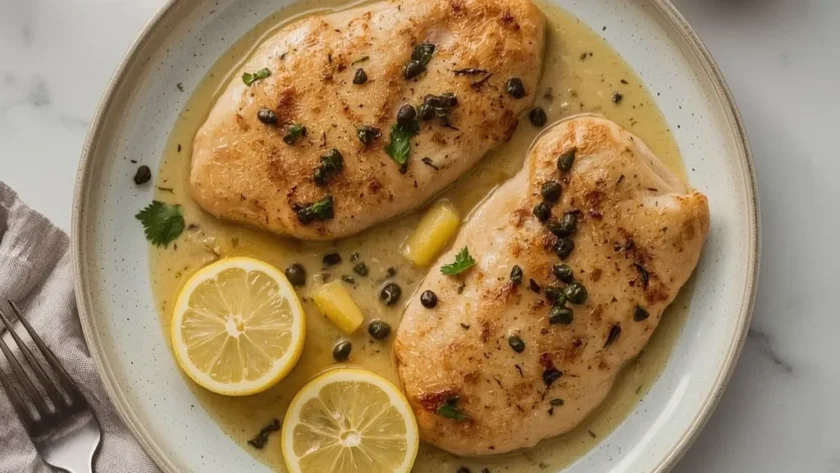
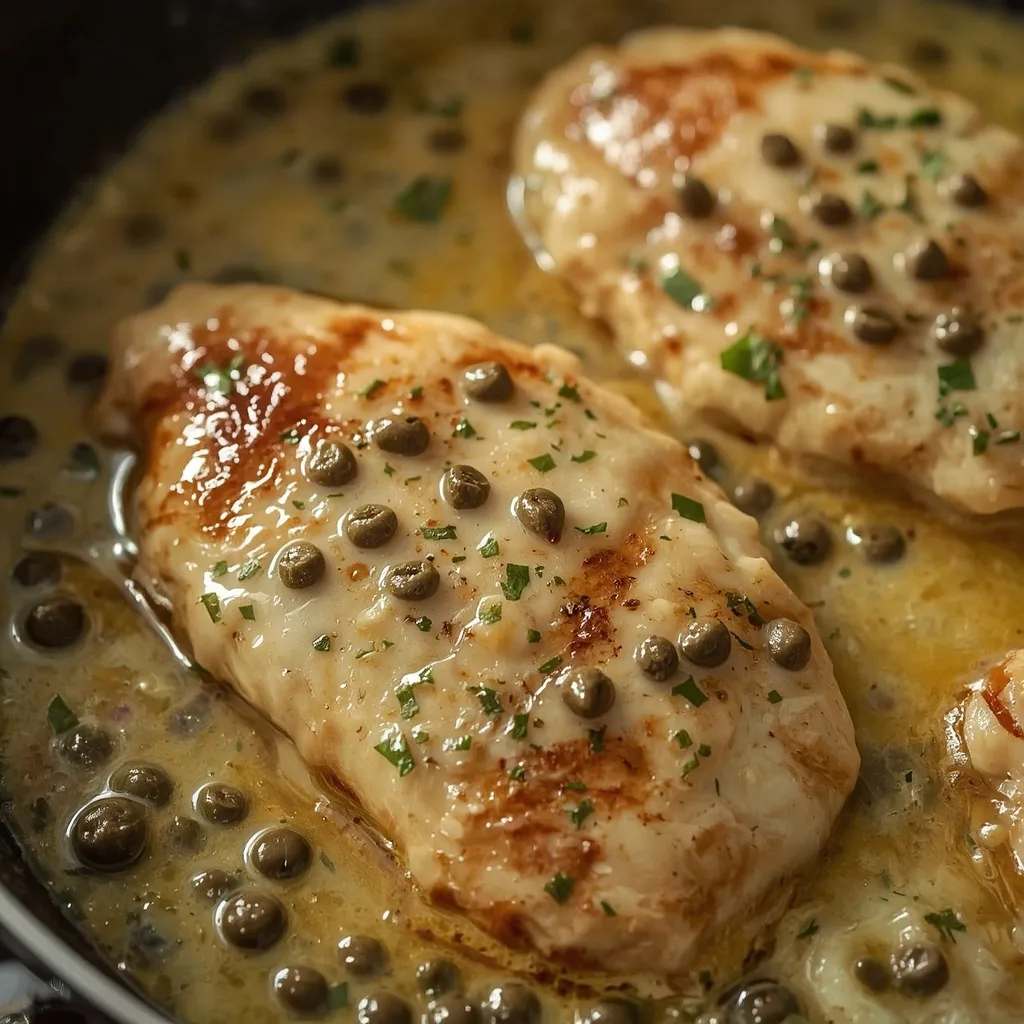
 Authentic Italian Chicken Piccata is that rare dish that feels elegant enough for company but comes together fast enough for a Tuesday night. Thin, golden cutlets swim in a buttery, lemony pan sauce studded with briny capers — each bite hits crispy edges, silky coating, and bright, tangy richness all at once.
From start to finish, you need about 35 minutes, and the stovetop method keeps things simple without sacrificing depth. This recipe is solidly beginner-friendly, though the butter-finishing step at the end demands a little attention — pull the pan off the heat too late, and the sauce can break. Serve it for a quick weeknight dinner, a date-night main course, or anytime you want something that tastes far more complex than the effort suggests.
What Is Authentic Italian Chicken Piccata?
Chicken Piccata features thin, flour-dredged cutlets pan-fried until crisp and finished in a lemon-caper butter sauce. The dish relies on a few pantry staples — white wine, fresh lemon juice, capers, and butter — to build a glossy, tangy pan sauce from the browned bits left in the skillet. The texture lands somewhere between a delicate crust and a silky, almost velvety coating once the sauce hits the chicken. Originating from Italian cooking traditions where piccata refers to the technique of slicing meat thin and serving it in a sharp, flavorful sauce, this classic Italian main course has become a staple in home kitchens worldwide.
Reasons to Try Authentic Italian Chicken Piccata
Here is why this dish earns a permanent spot in my rotation.
- Speed meets sophistication — the entire recipe clocks in at 35 minutes, yet the finished plate looks and tastes restaurant-worthy.
- Pantry-driven simplicity — most ingredients are already in your kitchen, from lemons and capers to flour and butter.
- One-skillet wonder — fewer dishes to wash means more time enjoying the meal and less time at the sink.
- Texture contrast done right — the crisp outer edges of the cutlets play against the silky, buttery lemon-caper sauce in every forkful.
- Endlessly adaptable — swap the protein, adjust the acidity, or add aromatics without breaking the core technique.
- A crowd-pleaser that reheats well — leftovers hold their flavor beautifully when warmed gently on the stovetop.
Ingredients Needed to Make Authentic Italian Chicken Piccata
You probably have most of these already — the capers might be the only thing you grab on a quick store run.
Protein and Seasoning
- Boneless, skinless chicken breast halves — four pieces totaling roughly 1½ pounds, trimmed of excess fat. Even thickness matters more than exact weight here.
- Kosher salt — 1 teaspoon seasons the cutlets before dredging. The larger granules adhere better than fine table salt.
- Freshly ground black pepper — ½ teaspoon adds a subtle warmth that balances the bright lemon. Pre-ground works in a pinch but lacks the same presence.
Dredging and Cooking Fat
- All-purpose flour — ½ cup for a light, even coating. Too much flour creates a gummy crust that slides off in the sauce.
- Extra-virgin olive oil — 2 tablespoons provide a high-heat base for browning. A neutral-tasting olive oil works best so it doesn’t compete with the delicate sauce.
- Unsalted butter, divided — 4 tablespoons total. Half goes into the initial searing for flavor and browning; the other half finishes the sauce off-heat for a glossy emulsion.
Sauce Builders
- Dry white wine — ½ cup, such as Pinot Grigio. The wine deglazes the pan and adds acidity. Unsalted chicken broth makes an easy swap if you prefer no alcohol.
- Low-sodium chicken broth — ½ cup rounds out the sauce body. Using low-sodium gives you control over the final salt level.
- Freshly squeezed lemon juice — ¼ cup from roughly 2 lemons, strained of seeds. Bottled juice lacks the brightness that defines a proper citrus butter sauce.
- Capers — 2 tablespoons, rinsed and drained well. Rinsing removes excess brine so the saltiness enhances rather than overpowers.
- Fresh flat-leaf parsley — 2 tablespoons finely chopped, plus more for garnish. The fresh herbaceous note cuts through the richness perfectly.
- Lemon slices — for serving. A thin wheel on each plate adds visual appeal and an extra pop of acidity.
Instructions to Prepare Authentic Italian Chicken Piccata
Each step builds on the last, so read through once before you start cooking — the sauce comes together quickly once the chicken hits the pan.
- Pound the cutlets — Place each chicken breast half between two sheets of plastic wrap or parchment paper. Use a meat mallet or heavy skillet to pound them to an even ¼-inch thickness. This ensures quick, uniform cooking. Pat the cutlets dry with paper towels and season both sides with the kosher salt and black pepper.
- Dredge lightly — Spread the flour in a shallow dish. Dredge each cutlet lightly in the flour, shaking off any excess. The coating should be thin and even — too much flour creates a gummy crust. Set the floured cutlets on a wire rack while you heat the skillet.
- Heat the fat — In a 12-inch skillet, heat the olive oil and 2 tablespoons of the butter over medium-high heat. Swirl the pan as the butter melts; when it stops foaming and just begins to turn golden, the fat is hot enough. Look for a shimmering surface with slight wisps of smoke.
- Sear in batches — Working in two batches to avoid crowding, carefully lay the cutlets in the skillet. Cook without moving them until the edges are deep golden and the bottom is crisp, 2 to 3 minutes. Use tongs to flip and cook the second side until golden and the chicken feels firm to the touch, another 2 to 3 minutes. The internal temperature should reach 165°F (74°C).
- Rest the chicken — Transfer the cooked cutlets to a clean plate and tent loosely with foil to keep warm. Pour off all but 1 tablespoon of fat from the skillet, leaving any browned bits stuck to the pan.
- Deglaze the skillet — Return the skillet to medium heat and immediately add the white wine, chicken broth, lemon juice, and capers. Use a wooden spoon or silicone spatula to scrape up all the flavorful fond from the bottom of the pan. This deglazing step builds the sauce’s depth.
- Reduce the sauce — Let the liquid bubble and reduce at a steady simmer, stirring occasionally, until it has reduced by about half and looks slightly syrupy, 3 to 5 minutes. The sauce will concentrate, and the sharp alcohol smell will mellow. Taste and adjust seasoning with a pinch of salt if needed.
- Finish with cold butter — Remove the skillet from the heat. Immediately add the remaining 2 tablespoons of cold butter, swirling and tilting the pan until the butter is completely melted and emulsified into the sauce. This off-heat method creates a silky, glossy finish without breaking the sauce.
- Add parsley and return the chicken — Stir in the chopped parsley, then return the chicken cutlets and any accumulated juices to the skillet. Spoon the sauce over the cutlets to coat them generously. Let them rest in the warm sauce for 1 minute to reheat gently.
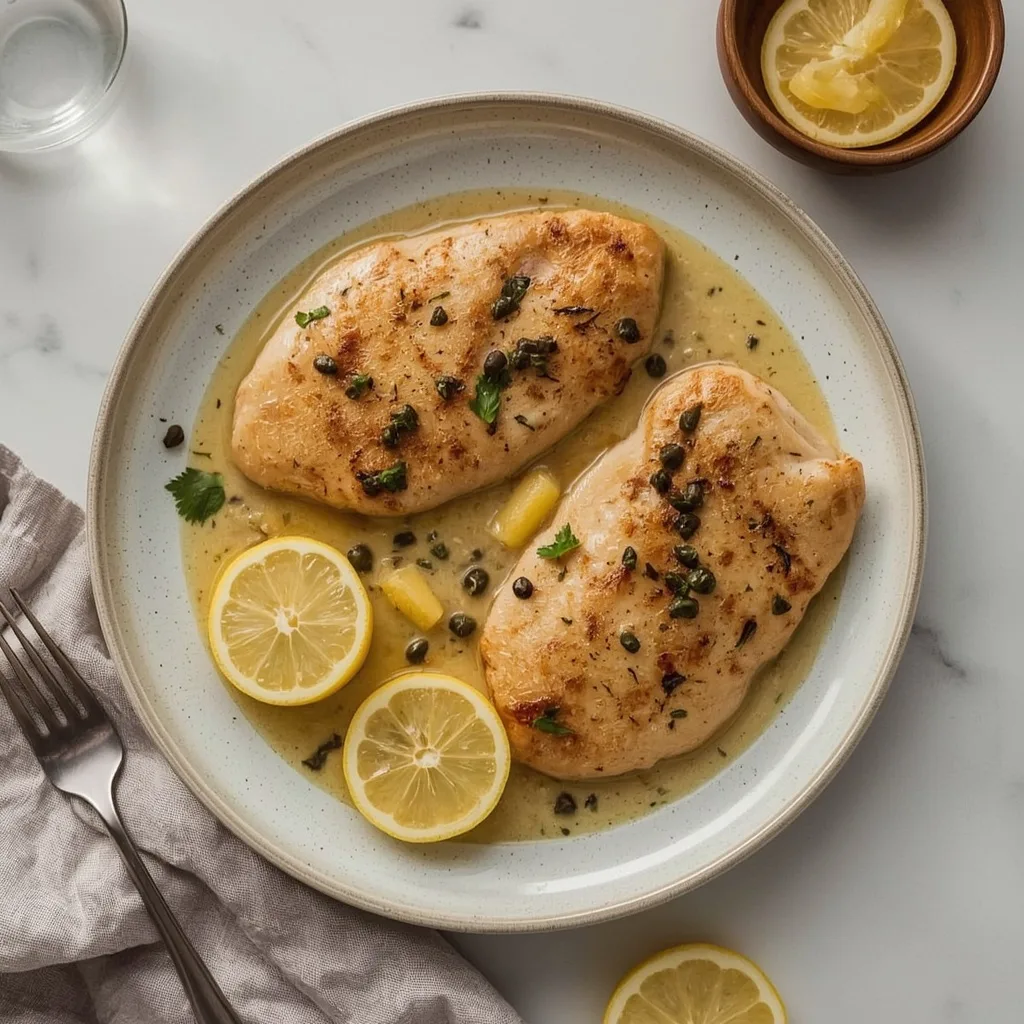
- Serve right away — Serve immediately, placing the chicken on warmed plates and spooning extra sauce and capers over the top. Garnish with fresh lemon slices and a sprinkle of parsley. This dish pairs beautifully with buttered pasta, creamy polenta, or a crisp green salad.
What Goes Well With Authentic Italian Chicken Piccata
The lemon-caper butter sauce begs for something to soak it up, so starchy sides and light vegetables are your best bets.
- Buttered angel hair pasta — thin strands twirl around the sauce effortlessly, making every bite count. A quick toss with a little reserved pasta water keeps it silky.
- Creamy Parmesan polenta — the soft, cheesy grits absorb the tangy sauce beautifully while adding a comforting, hearty base beneath the cutlets.
- Crisp arugula salad — peppery greens dressed simply with olive oil and a squeeze of lemon cut through the richness without competing for attention.
- Steamed green beans with almonds — a clean, snappy side that adds color and crunch. Toast the almonds in a dry pan for 60 seconds before tossing them in.
- Garlic-roasted baby potatoes — crispy on the outside, fluffy within, these soak up every last drop of sauce left on the plate.
- A chilled Pinot Grigio — the same wine used in the sauce makes a natural pairing. Its crisp minerality mirrors the lemon and brightens the whole meal.
Key Tips for Making Authentic Italian Chicken Piccata
Small adjustments make a big difference here. These are the things I learned the hard way so you don’t have to.
- Pound to an even ¼-inch thickness — uneven cutlets cook at different rates, leaving some dry and others underdone. A consistent thickness guarantees every piece finishes at the same moment.
- Dry the chicken thoroughly before seasoning — moisture steams the meat instead of searing it. Paper towels remove surface moisture so the flour adheres in a whisper-thin layer.
- Shake off excess flour completely — a heavy coating turns pasty when it hits the sauce. A light dusting creates that delicate, crispy edge without gumminess.
- Wait for the butter to stop foaming before adding cutlets — this visual cue signals the fat is hot enough for browning. Dropping chicken in too early results in pale, soft crusts.
- Never crowd the skillet — cutlets need space for steam to escape. Overlapping or packing them in traps moisture and steams the coating right off.
- Add the final butter off the heat — residual warmth melts it slowly into a glossy emulsion. High heat at this stage breaks the sauce into an oily, separated mess.
- Rinse the capers well — skipping this step dumps excess brine into the sauce, throwing off the salt balance. A quick cold-water rinse and drain keeps the flavor clean and intentional.
Creative Variations of Authentic Italian Chicken Piccata
Once you master the basic technique, these tweaks keep the dish feeling fresh without losing its Mediterranean soul.
- Use thin veal scaloppine instead of chicken — the classic piccata preparation actually started with veal. Pound veal cutlets the same way and reduce the cooking time by roughly 30 seconds per side since veal cooks faster.
- Add minced shallots or garlic after deglazing — sauté 1 tablespoon of finely minced shallots in the leftover fond for 30 seconds before adding the liquids. The aromatic sweetness deepens the savory backbone.
- Swap the wine for extra broth and a splash of vermouth — dry vermouth brings herbal complexity without the alcohol-forward taste. Use equal amounts as the wine measurement.
- Finish with a few lemon zest strips — bright yellow curls of zest stirred in with the parsley amplify the citrus notes and add visual contrast against the golden sauce.
- Turn it into a creamy version — stir a splash of heavy cream into the reduced sauce right before the off-heat butter step. The result feels luxurious and rounds out the sharp lemon edge.
- Add artichoke hearts or sun-dried tomatoes — drained, quartered artichoke hearts or thinly sliced oil-packed sun-dried tomatoes tossed in with the capers bring a Mediterranean twist and extra texture.
Storage Guidelines for Authentic Italian Chicken Piccata
This dish holds up well in the fridge, and the flavors often meld together even more by the next day.
- Refrigerator storage — transfer leftovers to an airtight container once cooled to room temperature. The chicken and sauce keep well for up to 3 days, though the coating softens slightly over time.
- Freezer option — freeze in a freezer-safe container for up to 2 months. The sauce texture may shift a bit upon thawing, but the flavor stays intact. Thaw overnight in the fridge before reheating.
- Sauce separation awareness — cold storage thickens the butter-based sauce considerably. This is normal and the sauce will loosen beautifully once rewarmed with a splash of broth.
- Portion before freezing — divide into single-serving containers if you plan to reheat one portion at a time. Repeated thawing and refreezing degrades the delicate texture.
Reheating Tips for Authentic Italian Chicken Piccata
Skip the microwave if you can — gentle stovetop or oven reheating preserves the sauce texture and keeps the chicken tender.
- Stovetop method, best overall — place chicken and sauce in a skillet over medium-low heat with a splash of chicken broth, cover, and warm gently until heated through, about 5 minutes. The broth reactivates the sauce and prevents scorching.
- Oven method, good for larger portions — arrange cutlets and sauce in a covered baking dish and reheat at 350°F (177°C) for 10 to 12 minutes. Keep the dish covered so the sauce does not evaporate and the chicken stays moist.
- Air fryer method, quick crisp revival — use the air fryer only if you want to recrisp the exterior. Heat at 350°F for 2 to 3 minutes, then spoon warm sauce over the top separately. The air fryer works best for restoring texture but can dry the meat quickly.
- Microwave method, use only in a pinch — zap at 50 percent power in 30-second bursts, checking between intervals. Full power toughens the chicken rapidly, so patience and lower power are non-negotiable here.
Nutrition Value (Per Serving)
Based on 1 serving out of 4 total, with sauce included. The numbers reflect the recipe as written with all ingredients accounted for.
- Calories — 312
- Protein — 28g
- Fat — about 15g
- Carbohydrates — roughly 13g
- Fiber — 0g
- Sugar — around 1g
- Sodium — about 380mg
FAQs
Can I make Authentic Italian Chicken Piccata without wine?
Yes, and the swap is straightforward. Replace the dry white wine with an equal amount of low-sodium chicken broth — the sauce will still be bright and flavorful, just slightly less acidic. A teaspoon of white wine vinegar stirred in at the end can mimic some of that missing sharpness if you want it.
What kind of capers work best for this recipe?
Non-pareil capers, the small variety packed in brine, are ideal. Their petite size distributes evenly through the sauce, and rinsing them thoroughly under cold water removes the harsh saltiness while keeping the briny, floral pop that makes a lemon-caper sauce sing.
How do I keep the flour coating from falling off?
Two things matter most: shake off every bit of excess flour after dredging, and do not move the cutlets once they hit the hot skillet. Letting them sear undisturbed for the full 2 to 3 minutes forms a proper crust that bonds to the meat. Flipping too early or handling them constantly tears the delicate coating.
Can Authentic Italian Chicken Piccata be made dairy-free?
It can, with a couple of adjustments. Swap the butter for a high-quality dairy-free butter alternative or use all olive oil for searing and a splash of extra broth at the end. The sauce won’t have the same glossy richness, but the bright lemon and briny capers still carry the dish beautifully.
Why did my sauce break and turn oily?
A broken sauce almost always points to too much heat when adding the final butter. Removing the skillet from the burner before swirling in the cold butter lets it melt slowly into a smooth emulsion. If it does break, whisk in a teaspoon of cold water or broth vigorously — sometimes that rescues it.
What is the difference between Chicken Piccata and Chicken Francese?
Both are classic Italian-American preparations, but the sauces differ distinctly. Piccata relies on lemon, capers, and butter for a tangy, savory finish. Francese skips the capers and often includes an egg dip before pan-frying, then finishes with a lemon-wine sauce that leans slightly sweeter and less briny.
Try These Popular Recipes
- Ina Garten Lemon Orzo Salad
- Ina Garten Orzo Pasta Salad
- Ina Garten Greek Orzo Salad With Arugula
- Ina Garten Asian Salmon
Wrapping Up
Authentic Italian Chicken Piccata delivers big flavor from a short ingredient list and a single skillet — exactly the kind of cooking I reach for when time is tight but takeout sounds uninspiring. The combination of crispy edges, tender chicken, and that glossy lemon-caper butter sauce never fails to impress. Give it a try on your next busy weeknight, and don’t be surprised if it becomes a regular request at your table.
PrintAuthentic Italian Chicken Piccata

Tender chicken cutlets pan-seared to golden perfection and bathed in a bright, buttery lemon-caper sauce. This classic Italian comfort dish offers a perfect balance of crispy edges and silky, tangy pan sauce that comes together in minutes.
- Prep Time: 15
- Cook Time: 20
- Total Time: 35
- Yield: 4 1x
- Category: Main Course
- Method: Stovetop
- Cuisine: Italian
Ingredients
- 4 boneless, skinless chicken breast halves (about 1½ pounds total), trimmed of excess fat
- 1 teaspoon kosher salt, plus more to taste
- ½ teaspoon freshly ground black pepper
- ½ cup all-purpose flour, for dredging
- 2 tablespoons extra-virgin olive oil
- 4 tablespoons unsalted butter, divided
- ½ cup dry white wine, such as Pinot Grigio (or substitute low-sodium chicken broth)
- ½ cup low-sodium chicken broth
- ¼ cup freshly squeezed lemon juice (from 2 lemons), strained of seeds
- 2 tablespoons capers, rinsed and drained
- 2 tablespoons finely chopped fresh flat-leaf parsley, plus more for garnish
- Lemon slices, for serving
Instructions
- Place each chicken breast half between two sheets of plastic wrap or parchment paper. Use a meat mallet or heavy skillet to pound them to an even ¼-inch thickness. This ensures quick, uniform cooking. Pat the cutlets dry with paper towels and season both sides with the kosher salt and black pepper.
- Spread the flour in a shallow dish. Dredge each cutlet lightly in the flour, shaking off any excess. The coating should be thin and even—too much flour creates a gummy crust. Set the floured cutlets on a wire rack while you heat the skillet.
- In a 12-inch skillet, heat the olive oil and 2 tablespoons of the butter over medium-high heat. Swirl the pan as the butter melts; when it stops foaming and just begins to turn golden, the fat is hot enough. Look for a shimmering surface with slight wisps of smoke.
- Working in two batches to avoid crowding, carefully lay the cutlets in the skillet. Cook without moving them until the edges are deep golden and the bottom is crisp, 2 to 3 minutes. Use tongs to flip and cook the second side until golden and the chicken feels firm to the touch, another 2 to 3 minutes. The internal temperature should reach 165°F (74°C).
- Transfer the cooked cutlets to a clean plate and tent loosely with foil to keep warm. Pour off all but 1 tablespoon of fat from the skillet, leaving any browned bits stuck to the pan.
- Return the skillet to medium heat and immediately add the white wine, chicken broth, lemon juice, and capers. Use a wooden spoon or silicone spatula to scrape up all the flavorful fond from the bottom of the pan. This deglazing step builds the sauce’s depth.
- Let the liquid bubble and reduce at a steady simmer, stirring occasionally, until it has reduced by about half and looks slightly syrupy, 3 to 5 minutes. The sauce will concentrate and the sharp alcohol smell will mellow. Taste and adjust seasoning with a pinch of salt if needed.
- Remove the skillet from the heat. Immediately add the remaining 2 tablespoons of cold butter, swirling and tilting the pan until the butter is completely melted and emulsified into the sauce. This off-heat method creates a silky, glossy finish without breaking the sauce.
- Stir in the chopped parsley, then return the chicken cutlets and any accumulated juices to the skillet. Spoon the sauce over the cutlets to coat them generously. Let them rest in the warm sauce for 1 minute to reheat gently.
- Serve immediately, placing the chicken on warmed plates and spooning extra sauce and capers over the top. Garnish with fresh lemon slices and a sprinkle of parsley. This dish pairs beautifully with buttered pasta, creamy polenta, or a crisp green salad.
Notes
Storage: Refrigerate leftovers in an airtight container for up to 3 days. The sauce may thicken when cold; it will loosen upon reheating. Freeze for up to 2 months, though the texture of the sauce may slightly change. Reheating: For best results, place chicken and sauce in a skillet over medium-low heat with a splash of broth, cover, and warm gently until heated through, about 5 minutes. Avoid the microwave, which can toughen the chicken. Alternatively, reheat covered in a 350°F (177°C) oven for 10 to 12 minutes.
Nutrition
- Calories: 312
- Sugar: 1g
- Sodium: 380mg
- Unsaturated Fat: 4.5g
- Carbohydrates: 13g
- Fiber: 0g
- Protein: 28g
- Cholesterol: 89mg
Keywords: chicken piccata, authentic Italian chicken piccata, lemon chicken, caper chicken, pan-fried chicken, quick dinner, Italian comfort food, lemon butter sauce, chicken cutlets, weeknight meal, easy Italian recipe, tangy pan sauce


